
A Multi Generation Trip Example That Actually Works

The best family trips do not force everyone into the same version of fun. A memorable multi generation trip example might put a 10-year-old in a warm river beneath a waterfall, a parent tackling a volcanic trail, and a grandparent lingering over a Caribbean breakfast with the sea in view. The point is not to keep every person busy every minute. It is to create a shared journey with enough range that each generation feels considered.
That is harder than booking a large resort and hoping for the best. Different energy levels, food preferences, confidence in the water, bedtimes, and expectations can turn even a beautiful destination into a negotiation. The answer is not a watered-down itinerary. It is thoughtful design: meaningful adventure, flexible pacing, comfortable places to recover, and a local team that handles the moving parts.
A multi generation trip example: One week in motion
Picture three generations traveling together: grandparents in their early seventies, two active adult siblings and their partners, and three children ages eight to fourteen. They want more than pool time, but no one wants a vacation defined by logistics, long drives, or pressure to perform.
They choose a small, oceanfront base in Dominica rather than a conventional resort. The family has apartment-style space to spread out, while still gathering easily for meals and evening conversation. Each day has a clear plan, but it is not a rigid march from one attraction to the next. Guided activities are selected around the group's real capabilities, weather conditions, and appetite for challenge.
Day one: Arrive, settle, and meet the island
Arrival day should stay deliberately light. After travel, the family settles into their accommodations, takes in the view, and has time to unpack before a relaxed dinner of fresh local ingredients. A host walks them through the week: what to bring on trails, which days involve water, where the terrain may be uneven, and how the group can communicate if someone needs an easier option.
This first evening matters. It replaces the usual family-trip uncertainty with confidence. The children know an adventure is coming. The adults know they will not spend the week researching routes and reservation times. Grandparents can see that comfort and safety have not been treated as afterthoughts.
Day two: Rainforest, waterfall, and a shared win
The first full day begins with a rainforest walk chosen for broad accessibility. The trail is lush, humid, and alive with birdsong, giant ferns, and the sound of water moving through the forest. It is active enough to feel like a real excursion, but it does not demand that every member of the group become a serious hiker.
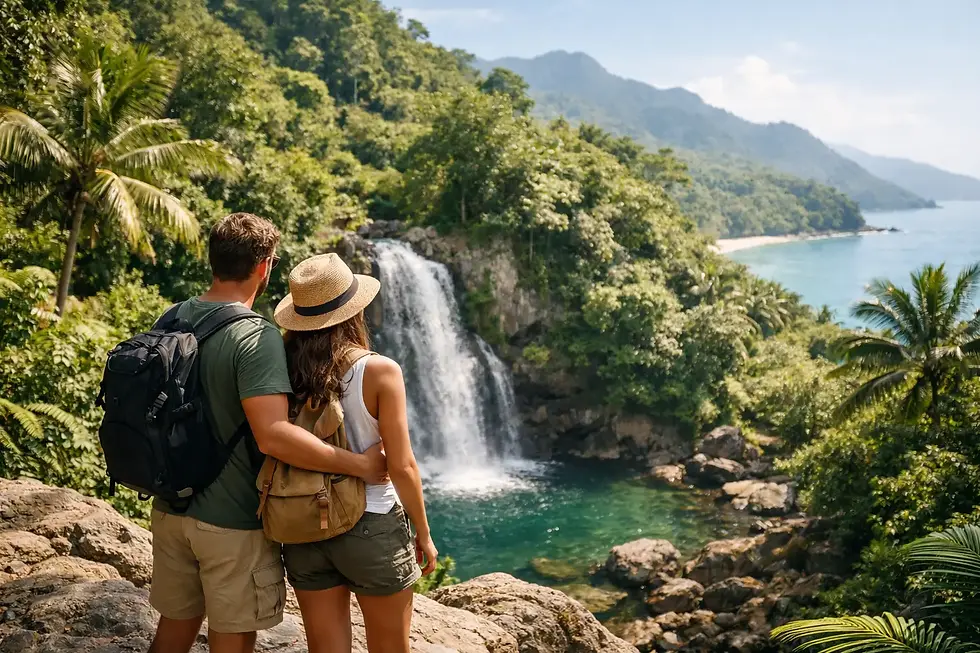
At the waterfall, the family finds its first shared victory. The more confident swimmers take a plunge in the cool pool. Others sit on a rock at the edge, take photographs, or simply absorb the scale of the landscape. A good guide makes this feel natural, not like anyone has opted out.
That afternoon is open. Some family members rest, while others take a short coastal walk or enjoy the water near their lodging. This is a crucial feature of a successful multi-generational itinerary: adventure is balanced by unclaimed time. People need room to reset before dinner, especially when they have traveled with relatives they do not see every day.
Day three: Separate paths, one story at dinner
Not every day needs to be experienced identically. This is where guided travel earns its place.
The adults and older children head out for a more demanding route, perhaps a rugged hike through the island's volcanic interior or a canyoning experience with helmets, ropes, river crossings, and expert instruction. It is a physical day, built for travelers who want to feel the terrain rather than view it through a vehicle window.
Meanwhile, the grandparents and younger child take a gentler route: a scenic drive, a shorter nature walk, a cultural stop, and a quiet river swim. The experiences are different, but neither group gets the lesser version of the destination. At dinner, the table is louder because everyone has a story to bring back.
This is a better model than making grandparents wait at a trailhead or asking children to spend hours doing an activity beyond their comfort level. Togetherness does not require identical schedules. It requires a rhythm that brings people back together with energy left to connect.
Day four: The coast at the family's pace
A day on and under the water gives the week a different texture. Depending on conditions and confidence, the group may snorkel over a wild reef, explore a quiet cove, or spend time on a boat along Dominica's dramatic coastline. Guides can provide flotation support and choose entry points that suit the least experienced participant without making stronger swimmers feel confined.
For a family that includes hesitant swimmers, this is where honest planning matters. Snorkeling can be magical, but it should not be sold as effortless if the sea is rough or access involves rocky footing. A well-run trip has alternatives ready: a sheltered swim, shoreline exploration, or a slower coastal outing. The aim is not to check a box. It is to help each traveler feel the island in a way that is both exciting and appropriate.
By late afternoon, the group has time for a long meal and an early night. Active travel works best when recovery is part of the itinerary, not something travelers have to fight for.
Day five: A family challenge with real choice
The middle of the trip is the right time for a bigger shared objective. For this family, it is a hike to a dramatic viewpoint above the rainforest, with routes and turnaround points explained in advance. The strongest hikers continue to the final overlook. Others walk the first section, enjoy the forest, and return with a guide when they have had enough.
This is not a compromise. It is informed choice. Travel becomes more generous when family members are not judged by mileage, speed, or bravery. The grandparent who turns back early may be the person who notices a rare flower. The child who needs encouragement may be the one most proud at the end of the day.
That evening, the family gathers for a celebratory dinner. They are tired in the good way: legs used, appetites earned, phones largely forgotten.
Days six and seven: Let the trip breathe
The final days should not become a frantic attempt to fit in every last sight. One final signature excursion might include another waterfall, a warm river, or a favorite local place that reveals daily life beyond the usual visitor circuit. Then leave time to revisit the beach, pack slowly, and talk about what each person wants to remember.
This is also when the small details become visible: the child who now wants to try snorkeling again, the parent who realizes they did not open a planning spreadsheet all week, the grandparent who felt included rather than managed. These are not accidental outcomes. They come from choosing an itinerary designed around people, not a catalog of excursions.
What makes this kind of family trip work
A multi-generational trip needs more than a destination with things to do. It needs a home base that is comfortable without isolating the group, activities with genuine variety, and guides who know when to encourage and when to adapt. The best schedule alternates active mornings with restorative afternoons and avoids stacking the hardest physical days back to back.
It also helps to decide what “active” means before booking. One family may be ready for canyoning and long climbs. Another may want scenic walks, river swims, and snorkeling with plenty of support. Neither is better. The problem begins when travelers assume everyone has the same threshold and discover the mismatch after arriving.
Wanderlust Caribbean approaches this with a fully guided, micro-hosted format: lodging, meals, daily adventure, and local coordination are handled as one experience. That structure removes the friction of organizing a complex group while keeping the trip personal, active, and deeply connected to place. It is not a spa vacation dressed up with one optional hike. It is Adventure Perfected for families who want to move through a destination together.
Before you invite the whole family, ask one useful question: what will make each person feel that this trip was made with them in mind? Build around that answer, and the waterfalls, trails, warm rivers, and long dinners will do the rest.


Comments